Product Introduction
Order stainless steel wire with stable diameter, clean surfaces, and controlled strength for mesh, springs, fasteners, filters, and formed parts.
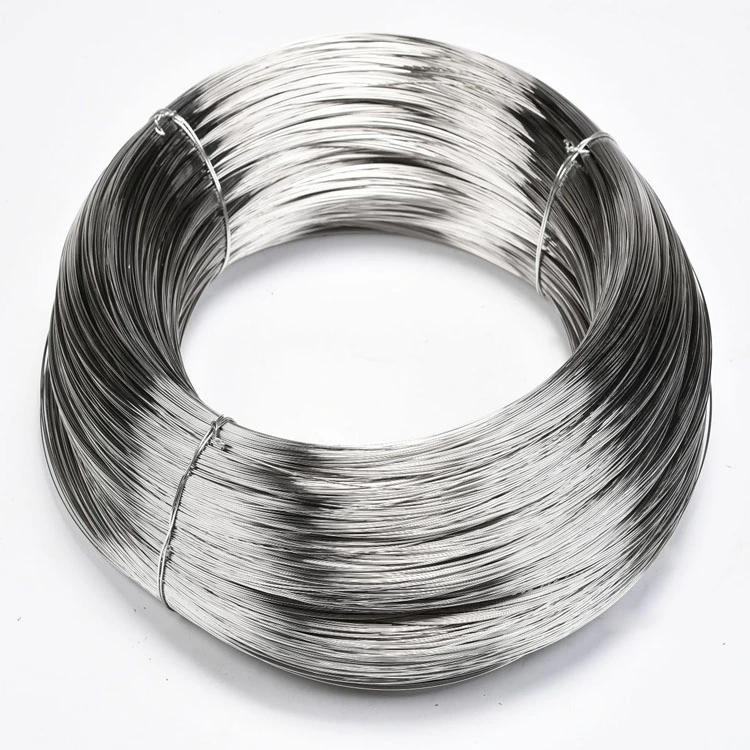


Stainless steel wire is used wherever strength, corrosion resistance, and accurate forming are required. It can be woven, wound, bent, welded, braided, or cold headed. Therefore, one wire product can support many different manufacturing processes.
We supply stainless steel wire with controlled diameter, tensile strength, surface condition, and coil shape. Customers can also select custom grades, tempers, coil weights, and packaging. As a result, the wire can match both manual fabrication and high-speed automated production.
A small difference in diameter or hardness can affect the finished part. It may cause uneven mesh, spring variation, tool wear, or feeding stops. For this reason, we control the wire from raw material inspection through drawing and final winding.
Our stainless steel wire offers:
These features help buyers improve output while reducing adjustments and material waste.
The wire specification can be matched to the final product and forming process.
| Product Feature | Available Selection |
| Grades | 302, 304, 304L, 316, 316L, 430 |
| Typical diameter | 0.10–12.00 mm |
| Material condition | Annealed, quarter-hard, half-hard, hard, spring temper |
| Surface | Bright, matte, pickled, polished, or coated |
| Supply form | Coil, spool, reel, carrier, or straight length |
| Wire shape | Round or custom profile |
| Standards | ASTM A580/A580M, ASTM A313, EN 10270-3 |
| Coil size | Standard or customized |
| Processing | Drawing, annealing, straightening, and cutting |
| Documents | Mill Test Certificate and inspection report |
Other diameters, grades, and standards can be discussed for regular-volume orders.
The correct wire is not selected by grade alone. Diameter, hardness, surface, and coil format must also fit the customer’s equipment.
Wire for weaving needs stable diameter and smooth feeding. It is used to produce woven mesh, filter screens, conveyor belts, and protective panels.
Wire for spring forming requires controlled tensile strength and reliable elastic recovery. It is suitable for compression springs, torsion springs, clips, and retaining rings.
Wire for cold heading must combine strength with good forming ability. It can be processed into screws, rivets, pins, and other fasteners.
Soft annealed wire bends easily and is suitable for binding, tying, craft products, and general fabrication.
Straightened wire is supplied in fixed lengths for shafts, pins, welding parts, racks, and custom components.
By reviewing the actual production method first, we can recommend a more suitable wire condition.
Grade 302 provides high strength and good spring performance. It is often used for mechanical springs and formed wire parts.
Grade 304 is a common option for general industrial use. It offers good corrosion resistance, weldability, and forming performance. Typical products include mesh, baskets, fasteners, and kitchen equipment.
Grade 304L has a lower carbon content. Therefore, it is useful for welded parts that need better corrosion resistance around the weld area.
Grades 316 and 316L contain molybdenum. This improves resistance to salt, chemicals, and chloride-rich conditions. These grades are preferred for marine equipment, chemical filters, food machinery, and pharmaceutical systems.
Grade 430 is a ferritic stainless steel with magnetic properties. It is used for selected household, decorative, and general manufacturing applications.
Production starts with stainless steel wire rod that matches the required grade. First, the rod surface is cleaned and prepared. It then passes through a series of dies until it reaches the target diameter.
The wire may be annealed between drawing stages to restore flexibility. Further drawing can then create the required hardness and tensile strength.
After drawing, the wire receives the selected surface treatment. Finally, it is wound onto a coil, spool, or carrier under controlled tension. This process helps maintain a stable coil shape and supports smooth feeding at the customer’s factory.
Surface quality affects both appearance and processing. Bright stainless steel wire has a clean, reflective finish and is suitable for visible products. Matte or pickled wire is practical for industrial parts where appearance is less important.
A suitable coating can also support further drawing or cold forming. Meanwhile, polished surfaces help reduce friction during weaving and winding.
Before shipment, we inspect the wire for scratches, scale, rust, and other visible defects. Careful winding also prevents tangles and sudden tension changes during payoff.
Stainless steel wire is used in products that require accuracy and long service life.
Common applications include:
For wet, salty, or chemical environments, 316 or 316L wire provides added protection. For spring products, 302 or hard-drawn 304 wire may offer a better balance of strength and forming performance.
Each batch is checked against the approved specification. Inspection can include:
Heat numbers connect the finished coils with their raw material and production records. Mill Test Certificates are available for qualified orders. Third-party inspection can also be arranged when stated in the contract.
We support trial quantities, bulk orders, and planned repeat supply. Samples can be prepared for forming tests before large-volume production.
For repeat projects, the confirmed grade, diameter, tensile range, surface, and coil format can be recorded. This makes later orders easier to manage and helps maintain stable performance between batches.
Mixed specifications can also be packed in one shipment when practical. In addition, production and delivery schedules can be planned around the buyer’s inventory needs.
The wire can be packed on coils, spools, reels, or metal carriers. Moisture-resistant film, woven wrapping, pallets, wooden cases, and reinforced steel frames are available.
Each package can show the material grade, diameter, heat number, net weight, and order reference. Protective packaging keeps the wire clean and reduces surface damage during storage and international transport.
Please provide the grade, diameter, tensile strength, surface finish, coil weight, quantity, application, and delivery destination. If the wire will run on automated equipment, please also share the required spool or carrier dimensions.
Our team will review the information and prepare a suitable manufacturing plan, sample option, quotation, and delivery schedule.


