Product Introduction
Source I-beam steel in A36, A572, S355JR, Q355B, and SS400 grades. Custom lengths, drilling, cutting, coating, certification, and export delivery.
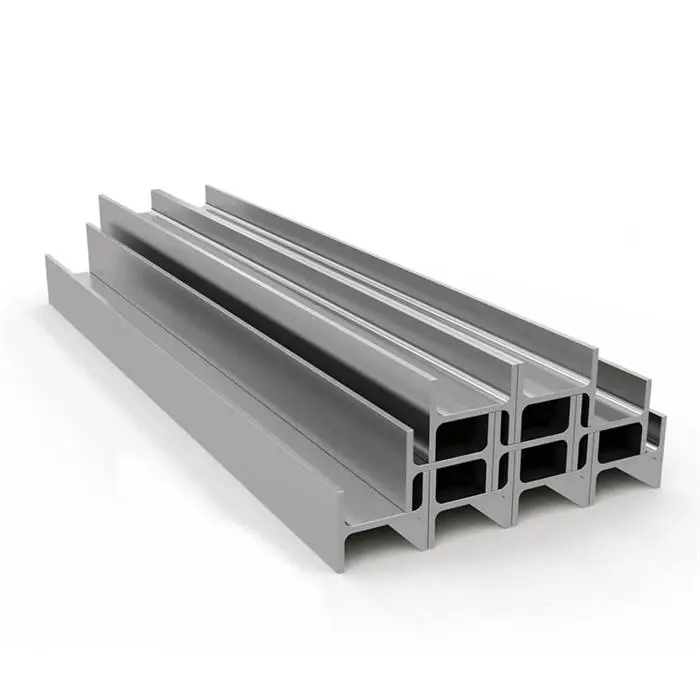


I-beam steel relies on a vertical web and two horizontal flanges to support bending and shear loads. This section design positions more material away from the neutral axis, where it effectively resists bending forces. As a result, I-beams deliver strong structural performance without requiring a fully solid cross-section.
ZES Metals provides hot-rolled and fabricated I-beam steel for contractors, steel structure manufacturers, equipment builders, distributors, and engineering projects. We offer standard sections, fixed-length beams, and processed components. Additionally, we can coordinate material inspection, surface treatment, packaging, and international shipping.
Customers can choose the section, grade, standard, length, and processing method based on their structural drawings.
| Product Item | Supply Options |
| Beam Types | Standard I-beam, IPE, IPN, and fabricated I-beam |
| Common Grades | ASTM A36, A572 Gr.50, S235JR, S275JR, S355JR, Q235B, Q355B, SS400 |
| Typical Section Height | 80–600 mm |
| Length | 6 m, 9 m, 12 m, or custom project length |
| Production Method | Hot rolled or welded fabrication |
| Surface | Black, shot-blasted, primed, painted, or galvanized |
| Processing | Cutting, drilling, coping, beveling, and welding |
| Standards | ASTM, EN, JIS, GB, or agreed project standard |
| Testing | Chemical composition, mechanical properties, dimensional checks, and visual inspection |
| Documents | Mill Test Certificate, packing list, and inspection report |
Available sizes vary by grade and standard. Therefore, please confirm final dimensions and theoretical weight against the applicable section table before placing an order.
Beam height alone does not determine structural performance. Customers should also consider flange width, web thickness, flange thickness, section weight, and moment of inertia.
Key selection factors include:
Design load
Unsupported span
Beam spacing
Support conditions
Deflection limit
Wind or seismic load
Connection design
Indoor or outdoor environment
Required fire or corrosion protection
Applicable building code
A deeper beam may offer greater bending resistance. However, it can also increase connection height, transportation volume, and overall project weight. For this reason, the selected section should follow calculations prepared by a qualified structural engineer.
Our steel plate application and grade guide explains how load, temperature, and service conditions influence structural material selection.
The required grade often depends on the project location and applicable design standard.
ASTM A36 I-beam steel is a popular choice for general construction, platforms, frames, and industrial structures. It delivers reliable strength and good weldability.
ASTM A572 Grade 50
has a higher yield strength than A36. Therefore, it is often used when the design requires higher load capacity or lower structural weight.S235JR and S275JR beams
are widely used in general European construction projects. Meanwhile, S355JR I-beams offer greater strength for warehouses, industrial plants, bridges, and heavy equipment.Q235B I-beam steel
is suitable for many conventional building and fabrication projects. Q355B provides higher strength for heavier loads and more demanding structures.SS400 I-beams
are commonly used in fabricated buildings, machinery frames, transport structures, and projects based on Japanese specifications. Grade names from different standards are not automatically interchangeable. Customers should confirm the full standard, delivery condition, impact requirements, and mechanical properties before approval.
Many traditional I-beams have narrower flanges and tapered inner flange surfaces. They are commonly used as bending members in floors, platforms, equipment frames, and secondary structures.
H-beams generally have wider, parallel flanges. They often provide more balanced performance for columns and heavy structural frames.
It should be noted that naming systems vary across markets. Therefore, purchase orders should not only specify “I-beam” or “H-beam.” They must include the exact section designation, standard, dimensions, theoretical weight, and grade.
Our processing capabilities include:
Hole locations, cut angles, tolerances, and welding details should be clearly marked on fabrication drawings. Processed beams can also be grouped by building zone, installation sequence, or assembly number.
Related connection plates and structural components can be sourced through our
steel plate supply range
. For rectangular brackets, rails, and supports, customers can also consider custom stainless steel flat steel.Shot blasting removes rust and mill scale, while creating a cleaner surface for primer and paint. Shop primer provides temporary protection during storage, transportation, and construction.
For outdoor or humid environments, customers may request a complete coating system. The specification should state the surface preparation grade, primer type, dry film thickness, topcoat, color, and expected service conditions.
Galvanizing is available for selected sections and lengths. However, beam size, zinc bath capacity, venting requirements, and deformation risks should be reviewed before production.
Each batch can be traced to its heat number. Qualified orders can include an EN 10204 Type 3.1 Mill Test Certificate or other relevant mill documentation. Third-party inspection can also be arranged if specified in the purchase contract.
Typical applications include:
For heavy equipment and mining projects, customers can also refer to our
carbon steel material solutions
.Each bundle is labeled with grade, section number, length, heat number, quantity, weight, and order reference. Fabricated beams may be marked with individual part numbers that match the installation drawings.
We support mixed-section orders, container loading, break-bulk shipping, phased delivery, and regular supply programs. Loading plans are reviewed based on beam length, total weight, unloading equipment, and destination requirements.
ZES Metals will review the specification and provide a suitable material option, processing plan, document list, packing proposal, delivery schedule, and formal quotation.
Can I-beam steel be supplied in fixed lengths?
Yes. Standard mill lengths and custom fixed lengths are available. Length tolerances should be specified in the purchase order.Can you drill holes and weld end plates?
Yes. Drilling, coping, beveling, stiffener welding, and end-plate assembly are available according to approved drawings.Which grade is suitable for warehouse structures?
A36, Q235B, Q355B, S235JR, and S355JR are common options. However, the final grade and section must follow the project engineer’s calculations and local building codes.Can different beam sizes be combined in one shipment?
Yes. Mixed sections can be arranged if quantity, loading method, and delivery schedule allow.Are inspection certificates available?
Yes. Mill Test Certificates, dimensional reports, coating reports, and agreed third-party inspection documents can be provided.


